


Wilder World, the long-gestating sci-fi metaverse MMORPG, is preparing to take a significant step toward a playable future. The development team has announced plans to release the first version of its open world to the public as early as next week, marking what it describes as the foundational layer of a much broader, evolving experience.
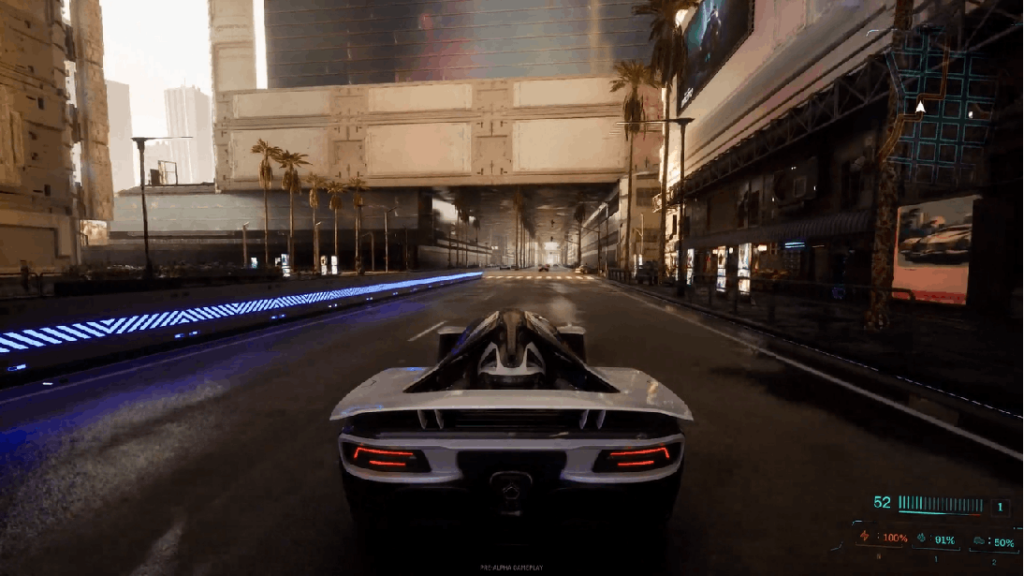
This initial rollout is positioned less as a feature-complete launch and more as a structural milestone. According to the team, the core framework is now in place, with subsequent updates expected to build iteratively on top of it. In practical terms, players should expect a relatively early snapshot of the game’s ambition — one that prioritizes environment, systems groundwork, and initial interactivity over depth or polish.
A Foundation With Systems Waiting in the Wings
While the first public version focuses on establishing the open world itself, Wilder World’s roadmap outlines a suite of systems intended to follow in rapid succession. These include multiplayer integration across the open world, structured racing modes, and higher-risk gameplay loops where players can lose equipped items upon death.
The developers are also planning extraction-style mechanics tied to gear, scavenging systems for loot acquisition, and the ability to equip owned vehicles referred to as “Wheels”—directly in-game. A global inventory system paired with a backpack mechanic is expected to unify player assets, while safe houses and garages hint at more persistent, player-centric progression.
On the economic side, vendors located in areas called “the Trenches” are intended to facilitate item trading, with transactions tied to blockchain infrastructure. Additional content drops covering apparel, vehicles, and weapons are also part of the post-launch cadence.
Taken together, these features suggest a hybrid design philosophy: part open-world sandbox, part survival extraction loop, layered with social and economic systems that extend beyond traditional MMO boundaries.
What Wilder World Is Trying to Be
At its core, Wilder World is an ambitious attempt to merge a photorealistic open-world game with persistent online systems and player-driven economies. Designed for PC, the game is set in a futuristic city known as Wiami — a sprawling urban environment reportedly comparable in scale to Night City from Cyberpunk 2077.
The game leans heavily on cinematic presentation, emphasizing real-time lighting, detailed textures, and environmental effects to create a visually immersive space. This aesthetic ambition is paired with a broad gameplay offering: third-person shooting, melee combat, and vehicular gameplay all coexist within the same world.
Players can engage in both PvE and PvP activities, explore narrative-driven quests, and customize avatars extensively. Street racing is positioned as a major pillar, with support for multiple vehicle types including cars, motorcycles, and hovercrafts. Meanwhile, AI-driven NPCs and interactive objects are intended to create a more dynamic and reactive world.
Wilder World also leans into the concept of digital ownership within its environment. Players are expected to acquire land, properties, and other in-game assets, shaping not just their progression but potentially the structure of the world itself.
The Web3 Layer: Ownership, Governance, and Constraints
A defining aspect of Wilder World is its integration of blockchain-based systems. The game operates with a partially decentralized model, where players can own and trade in-game assets—such as land, vehicles, and cosmetic items—outside the game client itself. These transactions are recorded via smart contracts on the Ethereum blockchain.
The ecosystem is governed in part through a DAO structure, with the $WILD token serving as a governance mechanism. In theory, this allows players to influence aspects of the game’s direction, aligning with broader trends in decentralized digital economies.
However, the implementation stops short of full decentralization. Wilder World is not open source, and its core infrastructure remains dependent on centralized servers. This creates a notable limitation: even if players retain ownership of their blockchain-based assets, access to the game world itself is contingent on the continued operation of its online services.
This hybrid model—combining decentralized asset ownership with centralized game delivery—reflects a compromise common across many Web3 gaming projects. It offers expanded control over digital goods while preserving the developer’s authority over the game environment.
A Measured Step Into a Larger Vision
The upcoming open world release represents a tangible, if early, manifestation of Wilder World’s ambitions. It is not yet the fully realized metaverse the project has long promised, but it does provide a critical testing ground for its systems, scale, and player engagement.
Whether Wilder World can successfully integrate its technical, economic, and gameplay pillars remains an open question. For now, the focus is on execution—delivering a stable, explorable world that can support the layers of complexity still to come.
Wilder World website: https://www.wilderworld.com/