


BladeRite: Rivals is preparing to open its next testing phase, with the “6–7 BETA” test set to arrive soon. While an exact launch time has yet to be confirmed, the messaging is clear: this test will spotlight competitive, fast-paced arena combat where only one player emerges victorious.
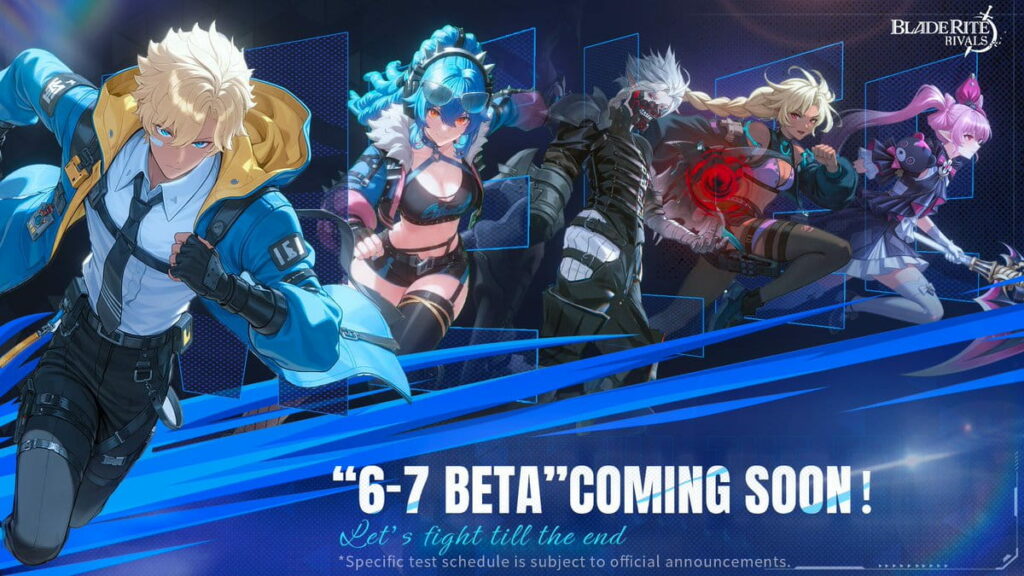
The format leans into a battle royale structure—20 players enter, a single winner leaves—framed around high-speed encounters and ability-driven fantasy combat. The emphasis appears to be on mechanical skill and moment-to-moment decision-making, rather than prolonged engagements or large-scale MMO-style encounters.
Though details on maps, progression resets, or matchmaking remain limited, the framing suggests a tightly scoped PvP experience designed to stress-test combat balance and player retention under competitive conditions. As with many beta phases, this test is likely as much about telemetry and iteration as it is about player-facing content.
While the exact date hasn’t been announced yet, the beta test is expected to happen quite soon. Interested players are invited to follow BladeRite on their social media (see below) to get notified in due time.
What BladeRite Is About
At a broader level, the borader BladeRite game positions itself as a free-to-play action RPG spanning both PC and mobile platforms. Developed by Seeds Studio, the original, base game blends PvE questing with PvP competition, allowing players to move between narrative-driven progression and more competitive modes such as arena battles in BladeRite Rivals.
Combat is real-time and ability-based, incorporating a mix of weapons and character skills that define playstyles. Progression systems revolve around leveling, gear acquisition, and incremental power growth, with loot playing a central role. Chests scattered throughout the game world act as key reward vectors, offering weapons, equipment, and rarer items that can influence both PvE and PvP performance.
The PvP component, highlighted by the Rivals beta, includes leaderboard-driven arenas where players compete directly. Around this, BladeRite builds a social layer of guilds, alliances, and community events, reinforcing its multiplayer ambitions.
A notable structural feature is its cross-platform design. BladeRite aims to provide a seamless experience across PC (Windows/Mac) and mobile (Android/iOS), allowing players to engage with the same ecosystem regardless of device.
Systems and Progression Layers
Beyond its core combat loop, BladeRite leans heavily on layered progression and itemization systems. Players are encouraged to continually refine their builds through gear upgrades, rare item acquisition, and skill optimization.
The in-game economy is designed to support trading and asset circulation, with players able to exchange items, improve equipment, and pursue higher-tier loot. This creates a feedback loop where exploration, combat, and economic activity all feed into player progression.
The Rivals test, in this context, functions as a focused slice of the broader design—isolating PvP combat while indirectly testing how progression and gear balance translate into competitive play.
The Web3 Layer: Ownership and Economy
BladeRite incorporates blockchain infrastructure as part of its economic design, building on the Solana network. The game supports a partially player-owned economy, where certain in-game assets—such as character skins, weapons, and gear—exist as NFTs and can be owned, traded, or transferred outside the game environment.
Transactions and ownership records are secured through smart contracts, providing verifiable control over digital items. The ecosystem is further supported by the $SEEDS token, which functions primarily as a medium of exchange and reward currency within the game.
In practical terms, this means players can acquire rare items through gameplay or purchase, then trade them in external marketplaces for real-world value. Special NFT-based chests, for instance, can unlock exclusive or high-tier gear, potentially offering competitive advantages.
However, as with many Web3-integrated games, this model operates within a hybrid framework. BladeRite itself is not open source, and access to the game world remains dependent on centralized servers. While asset ownership persists on-chain, the usability of those assets is still tied to the continued operation of the game’s infrastructure.
BladeRite website: https://bladerite.io/
FB: https://www.facebook.com/BladeRite.Official
X: https://x.com/blade_rite
TikTok: https://www.tiktok.com/@br_rivals_